There’s something almost magical about walking into a room filled with hanging plants. The way a pothos trails lazily from a high shelf, or the way a string of pearls spills over the edge of a macramé hanger like a green waterfall — it just makes a space feel alive. If you’ve ever scrolled through Pinterest and thought “I want my home to look like that,” chances are hanging plants were part of the picture.
The good news? You don’t need a fancy home or a green thumb to pull it off. Hanging plants indoors are surprisingly forgiving, incredibly versatile, and honestly one of the easiest ways to transform a plain room into something that feels warm, lush, and full of personality.
Let’s dig into everything you need to know — from choosing the right plants to hanging them safely and keeping them thriving.
Why Hanging Plants Work So Well Indoors
Before we get into the plant names and care tips, let’s talk about why hanging plants are such a great idea for indoor spaces — because it’s not just about looks.
They Use Vertical Space You’re Probably Wasting
Most of us fill our floors and windowsills with plants and then wonder why the room still feels bare. The ceiling is basically untapped real estate! Hanging plants draw the eye upward, make ceilings feel higher, and add dimension to a room without taking up any surface space at all. If you live in a small apartment, this is an absolute game-changer.
They Improve Your Air Quality (and Your Mood)
Plants are natural air purifiers. They absorb carbon dioxide and release oxygen, and some varieties — like pothos and spider plants — are even known to filter out common household toxins like formaldehyde and benzene. Beyond the science, there’s also something deeply calming about being surrounded by greenery. Studies consistently show that indoor plants reduce stress and improve concentration. So your hanging plant isn’t just pretty — it’s working for you.
They Keep Plants Away from Pets and Kids
If you have curious cats, toddlers, or both, you already know the struggle of keeping plants out of reach. Hanging them up high solves that problem elegantly. Just double-check that the plants you choose are non-toxic, especially if your pets are climbers (yes, I’m looking at you, cat owners).
The Best Hanging Plants for Indoors (With Care Tips)
Not every plant is cut out for life in a hanging basket — you need ones that either trail naturally, cascade beautifully, or at least don’t mind having their roots up in the air. Here are some of the best options, whether you’re a total beginner or a more experienced plant parent.
1. Pothos (Epipremnum aureum) — The Beginner’s Best Friend
If plants had a reliability rating, pothos would score a perfect ten. It trails beautifully, grows fast, tolerates low light like a champ, and bounces back even if you forget to water it for a week (or two). The golden pothos is the classic, but there are gorgeous varieties like ‘Marble Queen’ and ‘Neon’ that bring different textures and colors to your space.
- Light: Low to bright indirect light
- Water: When the top inch of soil feels dry
- Pro tip: The longer you let those vines trail, the more dramatic the effect. Some people let theirs grow six feet or more!
2. Spider Plant (Chlorophytum comosum) — The One That Keeps Giving
Spider plants are endlessly cheerful with their arching green-and-white striped leaves. Once they’re established and happy, they send out little “spiderettes” — baby plants dangling from long stems — that look absolutely adorable in a hanging basket. Plus, they’re one of the most air-purifying plants you can grow indoors.
- Light: Bright to medium indirect light
- Water: Once a week in summer, less in winter
- Pro tip: Those baby spiderettes can be snipped off and propagated in water — free plants for your friends!
3. String of Pearls (Senecio rowleyanus) — The Drama Queen (Worth It)
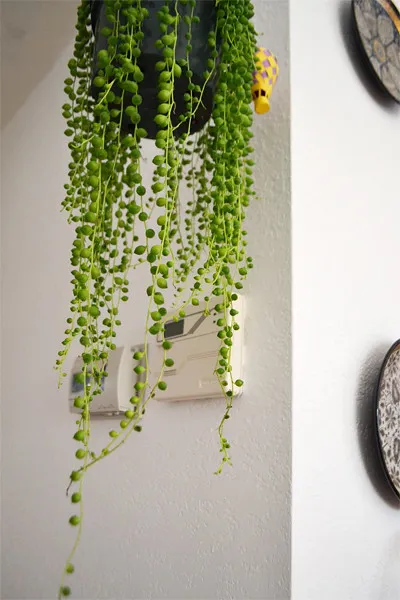
This one is for those who want something that genuinely stops people in their tracks. String of pearls looks exactly like what it sounds — bead-like little spheres strung along delicate stems, cascading down from a pot like something out of a botanical dream. It’s a succulent, so it stores water in those little pearls, which means it actually prefers to be underwatered rather than overwatered.
- Light: Bright indirect light (a few hours of morning sun is ideal)
- Water: Every 2–3 weeks; let the soil dry out completely between waterings
- Pro tip: Make sure your pot has drainage holes — sitting in wet soil is the fastest way to lose a string of pearls
MORE POSTS: How to make “string of dolphins” fuller?
4. Boston Fern (Nephrolepis exaltata) — The Classic, Lush Beauty
There’s a reason Boston ferns have been hanging in porches and parlors for over a hundred years — they’re gorgeous. Those feathery, arching fronds create an incredibly lush, full look that instantly makes a space feel like a garden. They do need a bit more attention than pothos or spider plants, but the payoff is absolutely worth it.
- Light: Bright indirect light; avoid direct sun
- Water: Keep the soil consistently moist (but not waterlogged)
- Humidity: This is the big one — Boston ferns love humidity. Mist them regularly, put them near a humidifier, or sit their pot on a tray of pebbles and water
- Pro tip: Bathrooms and kitchens with good light are often perfect spots for Boston ferns because of the natural humidity
5. Heartleaf Philodendron (Philodendron hederaceum) — The Low-Maintenance Charmer
Similar to pothos but with glossy, heart-shaped leaves that have a slightly velvety quality, the heartleaf philodendron is another fantastic beginner plant. It trails gracefully and grows quickly, so you’ll have a full, impressive display before you know it. It’s also incredibly forgiving if your care routine is… flexible.
- Light: Low to bright indirect light
- Water: When the top couple of inches of soil are dry
- Pro tip: If the leaves start yellowing, you’re probably overwatering. Brown tips usually mean the air is too dry
6. String of Hearts (Ceropegia woodii) — Delicate, Romantic, Unique
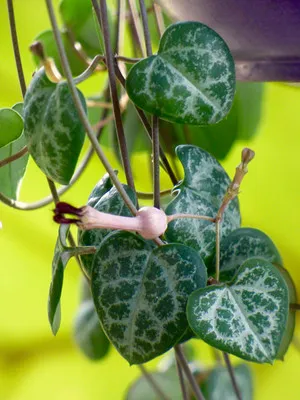
Tiny heart-shaped leaves on long, trailing vines — what’s not to love? String of hearts is a semi-succulent with a delicate, almost whimsical look. The leaves are dark green on top with a silvery marbled pattern and deep purple underneath, which makes it genuinely stunning when the light catches it just right.
- Light: Bright indirect light
- Water: Every 1–2 weeks; very drought-tolerant
- Pro tip: It grows slowly at first but speeds up once established — patience pays off with this one
How to Hang Indoor Plants Safely (Without Ruining Your Ceiling)
The aesthetic vision is clear. Now let’s talk about the practical side — because a full, well-watered hanging plant is heavier than it looks, and a poorly fixed hook is a disaster waiting to happen.
Find a Ceiling Stud
The golden rule of hanging anything heavy from a ceiling: always anchor into a joist (the structural beams above the drywall). Use a stud finder, tap along the ceiling until you find a solid spot, or look for the line of nails in the drywall as a guide. A screw hook drilled directly into a joist can safely support 20–30 lbs — more than enough for even the most ambitious plant setup.
No Stud? Use a Swag Hook with a Toggle Bolt
If you can’t find a joist in the perfect spot, toggle bolts (also called butterfly anchors) are your next best option. They expand behind the drywall and distribute the weight. Just check the weight rating before you buy — you want something rated for at least 15 lbs for a medium-sized plant.
Consider Tension Rods and Plant Stands for Renters
If you’re renting and can’t put holes in the ceiling, you have options! A tall tension rod in a corner can hold lightweight planters with S-hooks. Tall floor-standing plant hangers are another great alternative — they can hold hanging pots at height without touching the ceiling at all. Shower curtain tension rods in a window alcove are also surprisingly sturdy for lighter plants.
Use Hanging Pots with Built-in Saucers
This is the detail people forget until the first watering session soaks their floor. Choose hanging pots that come with a built-in drip tray, or use a plastic saucer that sits inside the hanger. Some people also remove their plants from their hangers to water them over a sink — a perfectly valid approach for lighter plants.
Creative Ways to Display Hanging Plants Indoors
The “one hook, one pot” approach is perfectly fine, but if you want to really go for it, here are some creative display ideas that can take your indoor hanging plant setup from nice to absolutely stunning.
Create a “Plant Cloud” Cluster
Hang several plants at different heights in the same area — a mix of trailing vines, ferns, and succulents at varying lengths creates an organic, layered look that feels lush and intentional. This works especially well in corners, above reading nooks, or in front of a large window.
Use Macramé Hangers for a Boho-Natural Feel
Macramé plant hangers have had a real resurgence in recent years — and for good reason. They add warmth and texture to a space that metal or plastic hangers just can’t match. You can find beautiful handmade ones on Etsy, or learn the basics yourself (there are wonderful beginner tutorials on YouTube).
Try a Hanging Shelf or Plant Ladder
A wooden hanging shelf suspended from the ceiling by ropes can hold multiple plants on different “rungs” and creates a beautiful living installation. Plant ladders — tall, freestanding ladder-shaped shelves — are another great way to display trailing plants at different heights without any ceiling drilling at all.
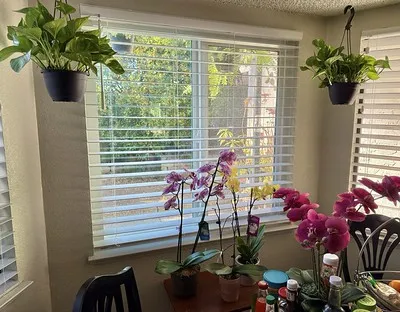
Frame a Window
Hang plants on either side of a large window to create a living frame. The backlight makes the leaves glow and adds incredible visual depth. This is one of those arrangements that photographs beautifully and also gives your plants the light they need — a genuine win-win.
Watering and Care Tips for Hanging Baskets
Hanging plants have slightly different needs than their floor-dwelling counterparts, mostly because they dry out faster. Here’s what to keep in mind:
- Check soil more frequently. Hanging pots are exposed to more air circulation, which means they lose moisture faster — especially in heated or air-conditioned rooms. Check the soil every few days rather than going by a fixed schedule.
- Water thoroughly. When you do water, water until it runs out of the drainage holes. This ensures the entire root ball gets moisture rather than just the top inch.
- Fertilize during the growing season. Because hanging plants are often in smaller pots with limited soil, the nutrients get used up faster. Feed with a balanced liquid fertilizer once a month during spring and summer.
- Rotate regularly. Hanging plants will naturally grow toward the light source. Give them a quarter-turn every couple of weeks for even, bushy growth.
- Prune those trailing vines. Long vines are gorgeous, but occasional trimming encourages fuller, bushier growth. Don’t throw those cuttings away — they’re free plants waiting to be propagated!
Common Mistakes to Avoid with Indoor Hanging Plants
Even experienced plant parents make these mistakes — so let’s save you some heartache:
- Hanging them in spots with no natural light. Dark hallways and windowless bathrooms are tempting because they need décor — but most plants won’t survive long-term without at least some indirect natural light. If you must put greenery in a dark spot, consider high-quality grow lights.
- Choosing pots without drainage. Decorative pots without holes look great, but they trap water at the bottom and lead to root rot. Either drill drainage holes yourself or use a plastic liner pot inside the decorative one.
- Underestimating the weight. A freshly watered large Boston fern can weigh 10–15 lbs. Always check your hardware’s weight rating before hanging anything substantial.
- Forgetting to clean the leaves. Dust accumulates on plant leaves and actually blocks light absorption. Gently wipe leaves with a damp cloth every few weeks — your plants will thank you with visibly perkier, greener growth.
- Going too big too fast. Start with one or two easy plants like pothos or spider plant. Get comfortable with their needs, then expand your collection. A room full of thriving plants is far more satisfying than a room full of struggling ones.
Final Thoughts: Start Small, Go Green, and Enjoy the Process
There really is something special about a home with hanging plants. It feels intentional. It feels alive. And once you experience that feeling, it’s hard to stop at just one.
The beautiful thing about hanging plants indoors is that you can start incredibly simply — one pothos in a macramé hanger near a sunny window — and gradually add more as your confidence grows. Every plant teaches you something, and every little trailing vine that reaches a new length feels like a tiny victory.
So pick one plant from this list, find a good spot for it, hang it up, and watch what it does to your room. I’m willing to bet you’ll be hooked within a week.
Happy planting! 🌿
Frequently Asked Questions
What is the easiest hanging plant to grow indoors?
Pothos (Epipremnum aureum) is widely considered the easiest hanging plant for indoors. It tolerates low light, irregular watering, and a wide range of temperatures, making it almost impossible to kill. It’s the perfect starting point for beginners.
How often should I water hanging indoor plants?
It depends on the plant and the season, but a good rule of thumb is to check the top inch or two of soil — if it’s dry, it’s time to water. Most hanging plants in average indoor conditions need watering every 5–10 days in summer and every 10–14 days in winter.
Can I hang plants indoors without drilling into the ceiling?
Yes! Tension rods in window alcoves, freestanding plant stands, tall plant ladders, and over-the-door hooks are all great alternatives to ceiling hooks. These options work especially well for renters or anyone who prefers not to make permanent changes to their home.
Which hanging plants are safe for cats?
Spider plants (Chlorophytum comosum) and Boston ferns (Nephrolepis exaltata) are among the most popular cat-safe hanging plants. Always verify toxicity with the ASPCA’s online plant database before adding a new plant to a home with pets.
Do indoor hanging plants need special soil?
Most indoor hanging plants do well in a standard, high-quality potting mix. For succulents like string of pearls or string of hearts, use a fast-draining cactus or succulent mix. Adding a handful of perlite to any mix improves drainage, which is especially helpful in hanging baskets that can retain moisture.