Last Updated on 2 months ago by Priyanka Handique
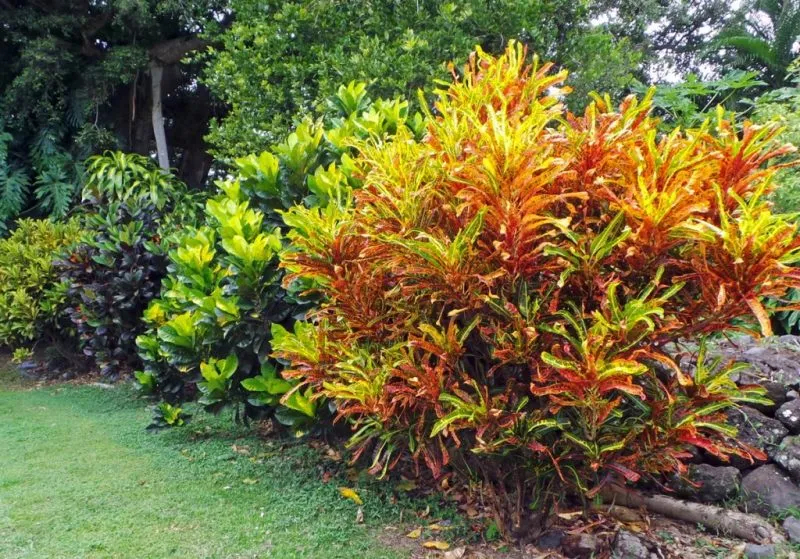
Few plants can match the visual intensity of Mammy Croton (Codiaeum variegatum ‘Mammy’). Its narrow, spiraling leaves twist and curl in every direction — splashed with bold swirls of red, orange, yellow, and deep green. Whether you’re designing a front-yard focal point or a lush poolside border, this tropical gem belongs in your toolkit.
What makes Mammy Croton special?
Unlike many ornamental shrubs that rely on blooms for visual interest, Mammy Croton delivers color through its foliage alone — and it does it relentlessly, all year round. The leaves are narrow and corkscrew-like, almost resembling maple leaves at peak autumn color. Grown in full sun, the pigments deepen and saturate further, becoming some of the most vivid foliage you’ll find in a warm-climate garden.
Native to southern Asia and the western Pacific islands, this shrub is built for heat and humidity. It thrives outdoors in USDA hardiness zones 10–11, and can be grown in containers and overwintered indoors in cooler climates.
7 creative ways to use Mammy Croton in your landscape
01
Front door focal point
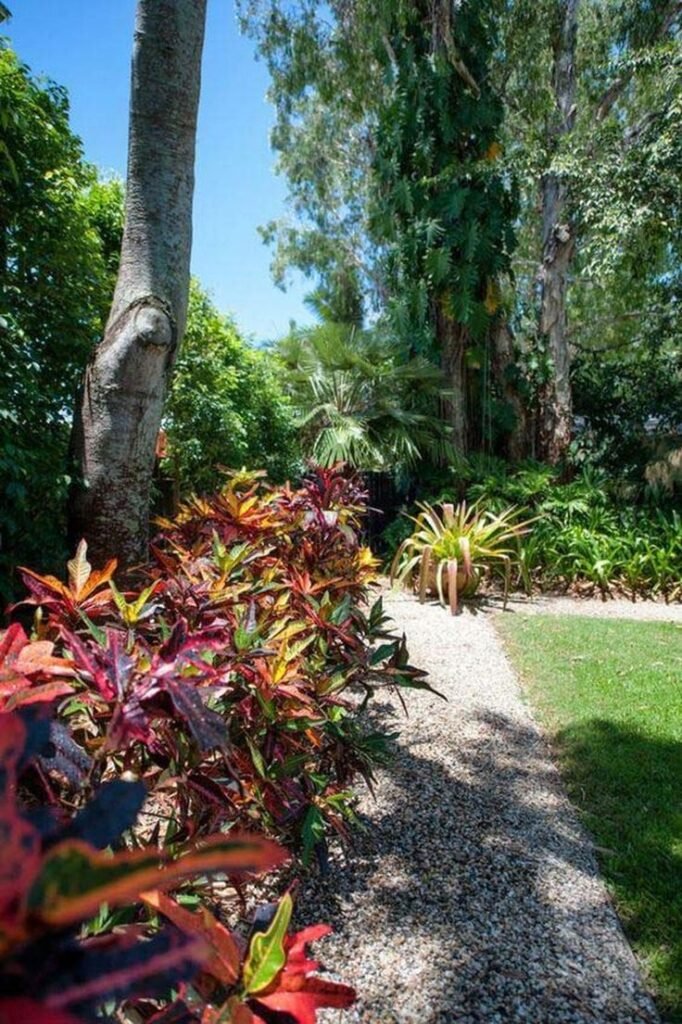
Cluster 3–5 plants near your entrance or along a front pathway. The spiraling foliage creates a dramatic welcome that catches the eye from the street.
02
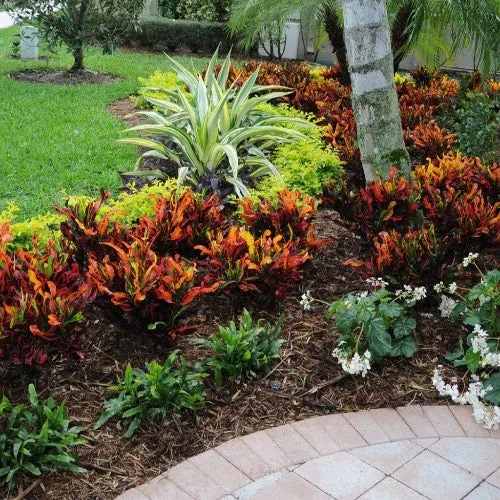
Tropical border edging
Plant them in rows or staggered clusters along garden paths, spacing each plant 2–3 feet apart for a seamless, vivid ribbon of color.
03
Natural privacy screen
Planted in a staggered row, Mammy Croton forms a lush, colorful barrier that's far more beautiful than a fence — and doubles as a habitat for wildlife.
04
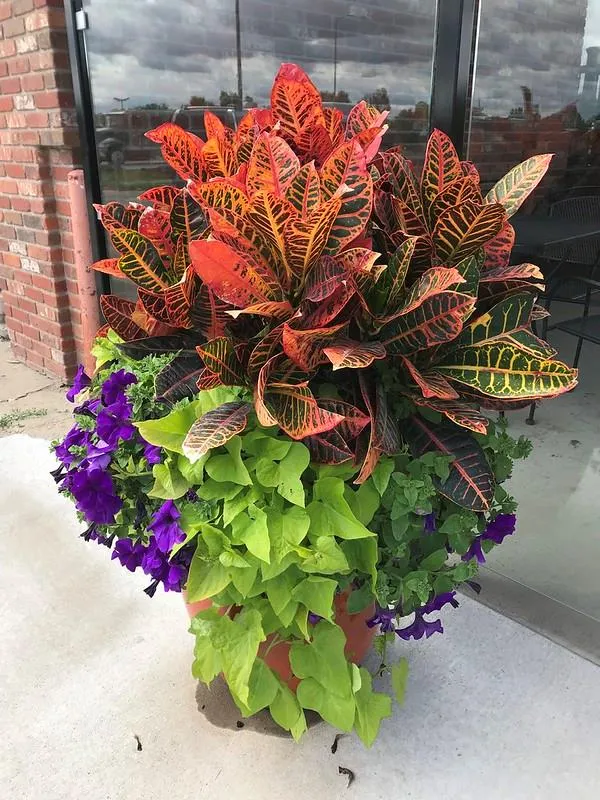
Container garden star
A single Mammy in a large decorative pot becomes an instant patio centerpiece. Mix it with creeping Jenny or bromeliads for a layered tropical display.
05
Layered mixed border
Use taller plants (palms, podocarpus) as backdrop and Mammy Croton in the middle tier. Fill the front with dwarf ixora or ruellia for a complete tropical scene.
06
Poolside accent planting
Crotons are non-messy and handle pool-area humidity well. Plant them in clusters to frame water features or add color to poolcage corners.
07
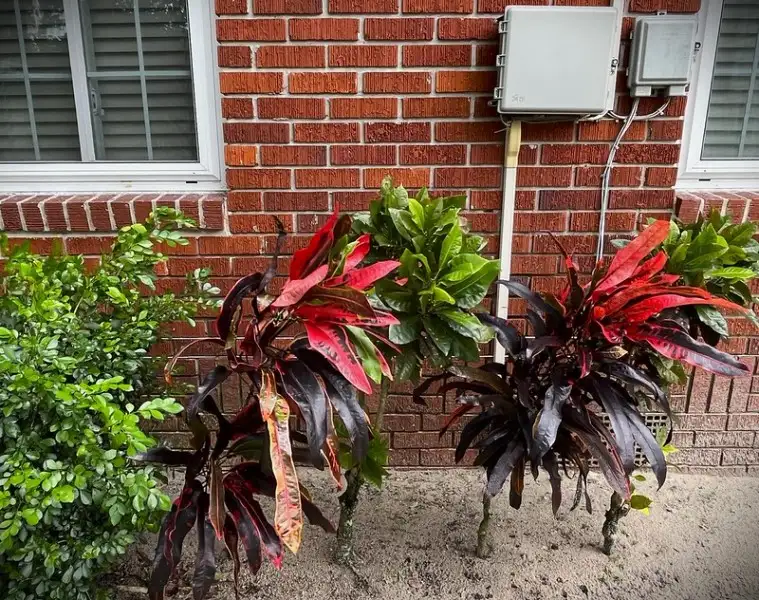
Foundation planting
Mammy Croton can be maintained at 2–2.5 feet with occasional pruning, making it ideal for planting along house foundations where bold, low-maintenance color is needed.
Best companion plants for Mammy Croton
The key is choosing plants that share similar light and drainage needs, while complementing — or contrasting — the warm tones of the croton’s foliage.
Ti Plant (Cordyline 'Red Sister')
Striking color contrast
Podocarpus
Calm green backdrop
Dwarf Allamanda
Yellow bloom pairing
Loropetalum Plum
Deep purple contrast
Bromeliads
Textural companion
Dwarf Ixora
Pops of red flowers
Thryallis
Airy yellow blooms
Tropical Hibiscus
Bold floral pairing
Ruellia
Purple flower contrast
Viburnum
Structural balance
Mixing Mammy Croton with flowering shrubs solves a common garden problem: you get consistent color in the landscape even while flowering plants are between bloom cycles.
Essential care at a glance
| Factor | What Mammy Croton needs |
|---|---|
| Sunlight | Full sun (80–100%) for best color intensity. Partial shade is tolerated but foliage colors may dull. Avoid deep shade. |
| Watering | Regular watering, but well-drained soil is non-negotiable — crotons will not tolerate waterlogged roots. Check soil before watering. |
| Climate | Best outdoors in zones 10–11. In zone 9B, grow in containers and bring indoors during cold snaps. Protect from frost and wind. |
| Mature size | Typically 2–3 feet when maintained with occasional pruning. Can reach 4–6 feet if left unpruned in warm climates. |
| Soil | Well-drained, humus-rich soil. Amend planting holes with compost or organic peat. Avoid heavy clay that retains water. |
| Fertilizing | Sparingly, 3 times a year with a slow-release fertilizer. Apply a few inches away from the base. Avoid cheap fertilizers with heavy salts. |
A note on design balance: Think of your garden as a canvas. Use Mammy Croton as you would a bold accent color in a painting — in focal patches and deliberate groupings, not scattered randomly across the space. Its intensity is its superpower, but restraint in placement lets it truly shine rather than compete with everything around it.
Design principles for a stunning result
1. Play with layers
Position taller plants behind Mammy Croton to frame it, and shorter ground-covering plants in front. This layering technique creates visual depth and ensures each plant gets its moment to shine.
2. Use scale intentionally
In a small garden, a single Mammy Croton in a statement container is enough to anchor the whole space. In a larger landscape, clusters of 3–5 create the density needed for real visual impact.
3. Repetition builds rhythm
Instead of using one each of many different plants, try planting the same variety in “drifts” — flowing repeats of 3–7 plants. This creates a cohesive, intentional landscape that feels designed rather than assembled.
4. Contrast with calm greens
The vivid reds and oranges of Mammy Croton read most powerfully when set against a backdrop of dark or neutral green foliage, a white wall, or light-colored gravel. Let the surrounding landscape play a supporting role.
A word of caution
Mammy Croton is toxic if ingested, and the milky sap can irritate skin upon contact. If you have young children or curious pets, consider its placement thoughtfully — border plantings along fences or raised beds work well for keeping it out of reach while still enjoying its beauty.
“A well-placed Mammy Croton doesn’t just add color — it transforms the entire mood of a garden into something vivid, alive, and unapologetically tropical.”