A dried flower wedding bouquet has a certain charm that fresh flowers can struggle to match. The muted colors, natural textures, and slightly imperfect shapes make each bouquet feel personal rather than overly polished. Better still, dried flowers can be prepared well before the wedding, so you are not trying to assemble everything at the last minute.
From soft neutral bouquets and romantic pampas grass arrangements to colorful wildflower-inspired bundles, there are plenty of ways to make a dried bouquet suit your wedding style. You can also mix flowers with grasses, seed pods, herbs, ribbons, or foliage to create something completely your own.
In this guide, you’ll find 10 DIY dried flower wedding bouquet ideas, along with practical advice on choosing flowers, arranging them, tying the bouquet, preserving it, and avoiding common mistakes.
Why Choose a Dried Flower Wedding Bouquet?
Dried flowers are particularly appealing for couples who want a bouquet that can be prepared ahead of time and kept as a wedding keepsake.
Some advantages include:
- Long-lasting: Properly dried flowers can remain attractive long after the wedding.
- Easy to prepare ahead: You can arrange your bouquet days or weeks before the ceremony.
- Natural texture: Dried grasses, seed heads, and flowers add depth and movement.
- Flexible color palette: Neutral, earthy, pastel, and muted shades all work beautifully.
- Keepsake potential: Your bouquet can become part of your home décor after the wedding.
- DIY-friendly: Many dried arrangements don’t require professional floristry skills.
The main thing to remember is that dried flowers are more fragile than they look. Handle them gently, especially when arranging and tying the stems.
10 DIY Dried Flower Wedding Bouquet Ideas
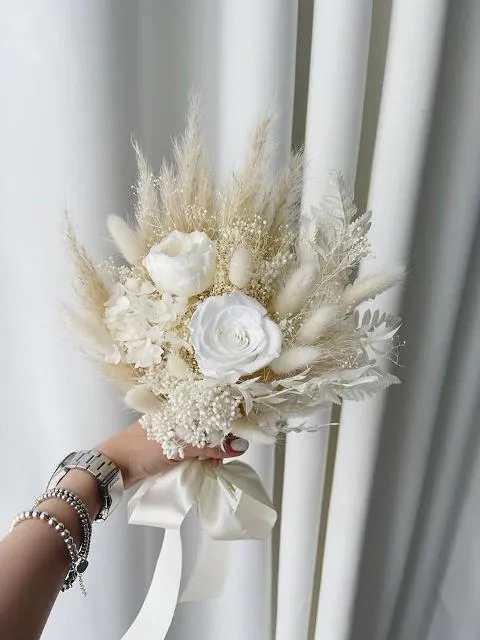
1. Neutral Dried Flower Bouquet
For a timeless look, stick to a palette of cream, beige, tan, soft brown, and ivory.
Combine dried pampas grass with bunny tails, wheat, bleached foliage, baby’s breath, and neutral-colored flowers. Finish the stems with ivory or linen ribbon.
This style works especially well for rustic, boho, minimalist, and countryside weddings.
DIY tip: Keep the color palette restrained. Using too many shades can make a neutral bouquet look muddy rather than elegant.
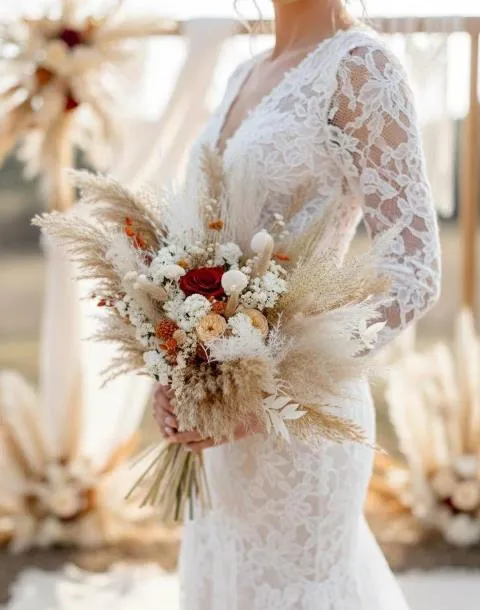
2. Boho Pampas Grass Bouquet
Pampas grass is almost synonymous with bohemian wedding décor, and it makes an excellent focal point for a bouquet.
Start with several stems of pampas grass and add smaller dried flowers around them. Lagurus, ruscus, palm leaves, wheat, and other dried grasses can help fill the arrangement without competing with the fluffy pampas.
A loose, asymmetrical shape usually looks more natural than a perfectly round bouquet.
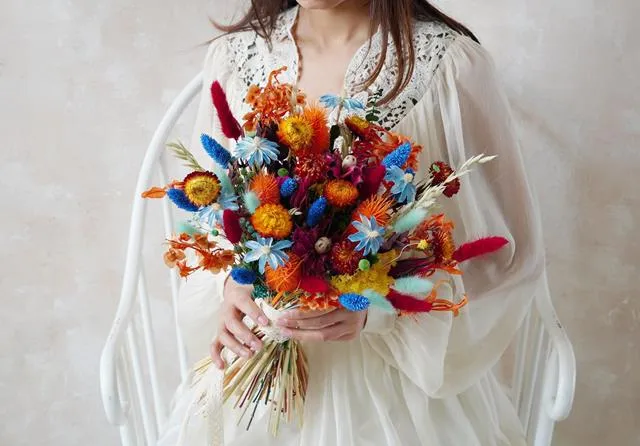
3. Colorful Dried Wildflower Bouquet
Who says dried flowers have to be beige?
A colorful bouquet can include dried flowers in shades of rust, burgundy, mustard, dusty pink, lavender, orange, and muted blue.
Choose two or three dominant colors and use smaller contrasting flowers as accents. This gives the bouquet personality without making it look chaotic.
This idea is particularly nice for an autumn wedding.
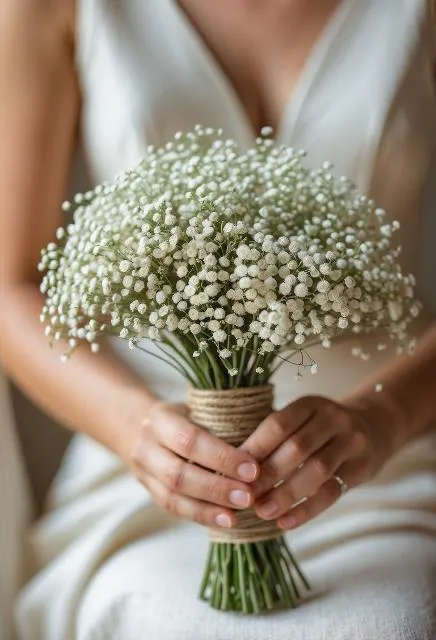
4. Baby’s Breath Dried Flower Bouquet
For something simple and delicate, use dried baby’s breath, also known as gypsophila.
You can make a full bouquet using only baby’s breath or combine it with a few larger dried flowers. Its tiny flowers create a soft, cloud-like appearance and work particularly well with simple wedding dresses.
Tie the stems with satin ribbon for a traditional look or use jute twine for a rustic finish.
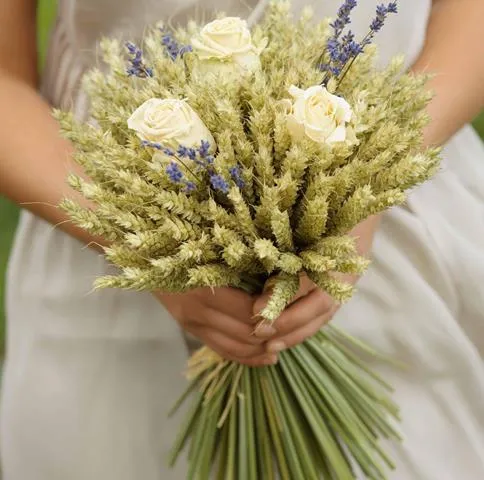
5. Dried Roses and Wheat Bouquet
Dried roses bring a romantic element to an otherwise rustic arrangement.
Combine preserved or naturally dried roses with wheat, bunny tails, dried grasses, and small filler flowers. Warm shades such as dusty pink, burgundy, terracotta, and cream work particularly well together.
Keep the wheat and grasses slightly taller than the roses to create an organic, layered silhouette.
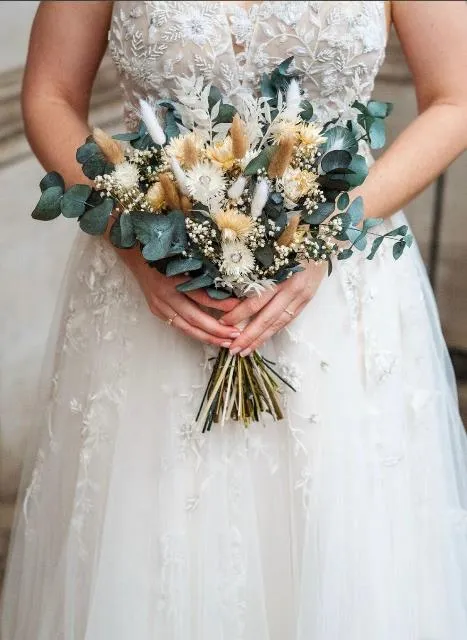
6. Rustic Herb and Dried Flower Bouquet
For a garden-inspired bouquet, introduce dried herbs and foliage alongside flowers.
Depending on availability, you might use dried eucalyptus, rosemary, lavender, grasses, and small dried blooms.
The herbs add texture and a slightly informal garden feel. They’re also a nice choice if you prefer foliage to dominate the bouquet rather than large flowers.
Tip: Make sure every plant is completely dry before adding it to the arrangement. Moisture trapped inside the bouquet can encourage mold.
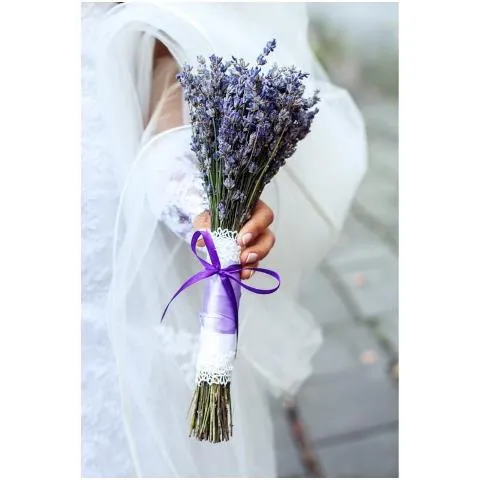
7. Lavender Dried Flower Bouquet
Dried lavender is an easy way to introduce soft purple tones and a delicate texture.
Create a simple lavender-only bouquet for a minimalist wedding, or combine it with cream flowers, wheat, bunny tails, and neutral grasses.
A lavender bouquet looks especially lovely wrapped in natural linen, lace, or a soft lavender-colored ribbon.
8. Palm Leaf and Dried Flower Bouquet
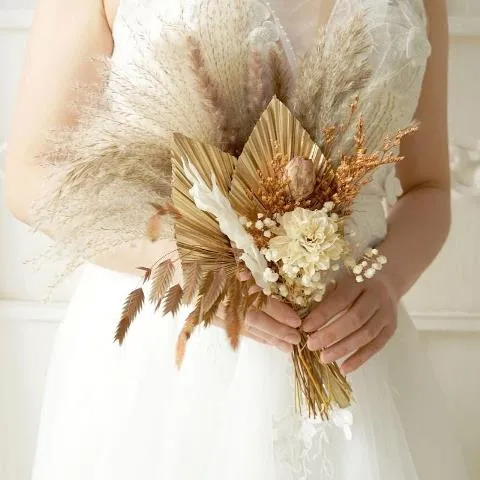
For a dramatic boho look, use dried palm leaves as the structural element of your bouquet.
Place the larger leaves toward the back or sides, then build the flowers and grasses toward the center. The large leaves create a striking silhouette while smaller dried flowers soften the overall appearance.
This is a good option if you want a bouquet that photographs well from a distance.
9. Small Dried Flower Posy
Bigger isn’t always better.
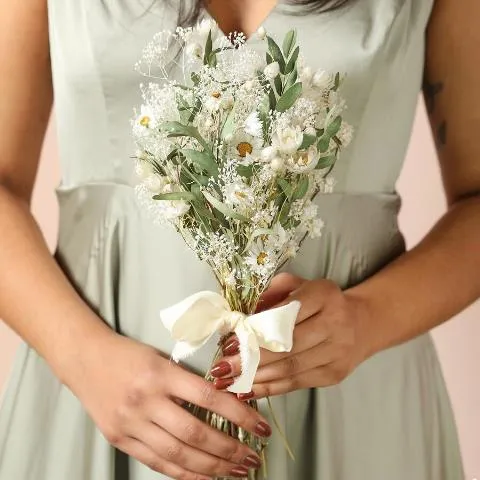
A small posy made from a handful of dried flowers can look incredibly elegant, particularly with a simple wedding dress or courthouse ceremony.
Choose one main flower, two filler varieties, and a little foliage. Keep the stems short and wrap them tightly with ribbon.
This idea is also practical for bridesmaids. You can create several matching mini bouquets without needing a huge amount of dried material.
10. Asymmetrical Dried Flower Bouquet
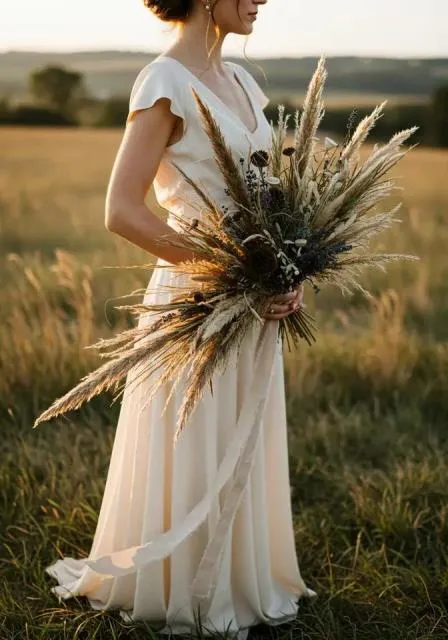
If you prefer a modern, artistic look, try an asymmetrical arrangement.
Instead of creating a perfectly rounded bouquet, allow a few grasses or flowers to extend farther on one side. Combine flowers of different heights and textures to create movement.
The key is intentional imbalance. It should look naturally arranged rather than accidentally uneven.
How to Make a Dried Flower Wedding Bouquet
Making your own bouquet is surprisingly straightforward. The trick is to build it gradually instead of trying to arrange everything at once.
What You’ll Need
Gather:
- Dried flowers
- Dried grasses and foliage
- Floral wire, if needed
- Floral tape
- Sharp scissors or flower snips
- Ribbon, lace, or twine
- A clean, dry workspace
Step 1: Choose Your Color Palette
Pick a few colors before you start. Cream and beige create a classic neutral bouquet, while rust, burgundy, and orange give you a warmer autumn appearance.
Having a palette prevents you from buying or using flowers that don’t work together.
Step 2: Select a Focal Flower
Choose one or two larger flowers to form the visual center of the bouquet.
Hold them loosely in one hand and gradually add smaller flowers around them.
Step 3: Add Texture
Now introduce grasses, seed heads, baby’s breath, bunny tails, wheat, or foliage.
Vary the heights rather than keeping every stem at exactly the same level. A little variation makes the arrangement look much more natural.
Step 4: Check the Shape
Hold the bouquet away from you and look at it from different angles.
Remove stems that feel crowded and add material where the bouquet looks too thin. Don’t be afraid to let a few stems stick out.
Step 5: Secure the Stems
Once you’re happy with the arrangement, hold the stems firmly and wrap floral tape around the bundle.
Don’t squeeze too hard. Dried stems can snap surprisingly easily.
Step 6: Finish With Ribbon
Cover the floral tape with your chosen ribbon, lace, or twine.
For a polished wedding look, wrap the ribbon neatly around the stems and secure the end discreetly.
How to Tie a Dried Flower Bouquet
Knowing how to tie a dried flower bouquet properly makes a big difference because dried stems can shift or break during handling.
Hold the bouquet in one hand and place each new stem slightly diagonally across the previous one. Continue adding flowers while rotating the bouquet slowly.
Once the bouquet has reached the desired size:
- Grip all the stems firmly below the flower heads.
- Adjust the flowers one final time.
- Wrap floral tape around the stems.
- Trim the stems to a similar length.
- Wrap the handle with ribbon or twine.
- Secure the ribbon with a small pin or discreet adhesive.
For a loose, organic bouquet, don’t try to make every flower perfectly symmetrical. Dried arrangements usually look better when they retain some natural irregularity.
How to Keep a Dried Flower Wedding Bouquet Looking Beautiful
A dried bouquet doesn’t need much maintenance, but its biggest enemies are moisture, direct sunlight, and rough handling.
Keep it:
- In a dry environment
- Away from water and high humidity
- Out of prolonged direct sunlight
- Protected from heavy handling
- Away from areas where it can easily be knocked over
If dust settles on the flowers, use a very gentle stream of cool air rather than wiping the petals with a cloth.
If you’re preparing the bouquet well before the wedding, store it somewhere dry and relatively protected until the big day.
Common DIY Dried Bouquet Mistakes to Avoid
Using too many flower varieties
A bouquet doesn’t need ten different types of flowers to look interesting. Too many varieties can make the arrangement visually busy.
Making everything the same height
Uniform stems can make a dried bouquet look stiff. Vary the height and shape of your flowers and grasses.
Tying the bouquet too tightly
Over-tightening the stems can crush delicate dried flowers and cause them to break.
Choosing flowers that are not completely dry
Even slightly damp plant material can deteriorate during storage. Make sure everything is thoroughly dried before assembling the bouquet.
Ignoring the wedding dress
Your bouquet should complement your overall look. A huge, dramatic bouquet may overwhelm a simple dress, while a tiny posy could disappear beside a highly detailed gown.
Fresh vs. Dried Wedding Bouquets
| Feature | Dried Bouquet | Fresh Bouquet |
|---|---|---|
| Preparation | Can be prepared ahead | Usually assembled closer to the wedding |
| Longevity | Long-lasting | Usually short-lived |
| Maintenance | Relatively low | Requires water and careful handling |
| Texture | Rustic and natural | Fresh and soft |
| DIY difficulty | Generally manageable | Can be more time-sensitive |
| Keepsake | Easy to preserve | Requires additional preservation |
Neither option is automatically better. It really comes down to the look you want, your wedding schedule, and whether keeping the bouquet afterward matters to you.
Frequently Asked Questions
How long does a dried flower wedding bouquet last?
A properly dried bouquet can last for a long time when kept away from moisture, direct sunlight, and excessive handling. Individual flowers may gradually become more fragile or fade over time.
Can I make my dried wedding bouquet myself?
Yes. Dried flowers are well suited to DIY arrangements because they don’t require water and can generally be assembled ahead of the wedding. Start with a simple design if you have never arranged flowers before.
What flowers are best for a dried wedding bouquet?
Popular choices include dried roses, baby’s breath, lavender, pampas grass, wheat, bunny tails, dried eucalyptus, palm leaves, and various grasses and seed heads. The best combination depends on your color scheme and wedding style.
How far in advance can I make a dried flower wedding bouquet?
Because dried flowers don’t need water, you can prepare the bouquet well before the wedding. Store it carefully in a dry, protected place and avoid unnecessary handling.
How do you stop dried flowers from falling apart?
Handle them gently and avoid excessive movement. Securing the stems properly with floral tape can help keep the arrangement together, while storing the bouquet somewhere dry and protected reduces damage.
Can dried flowers be combined with fresh flowers?
Yes, but the different care requirements can make the arrangement more difficult to maintain. Fresh flowers need water, while dried flowers generally need to stay dry. For an easier DIY wedding bouquet, using predominantly dried materials is simpler.
What ribbon looks best with a dried flower bouquet?
Linen, cotton, satin, velvet, lace, and natural twine can all work. Choose the material based on your wedding style—linen and twine suit rustic and boho arrangements, while satin and velvet create a more formal appearance.
Final Thoughts
A dried flower wedding bouquet is a lovely choice if you want something personal, practical, and easy to prepare ahead of time. You don’t need professional floristry skills or an enormous collection of flowers. A few well-chosen blooms, grasses, foliage, and a beautiful ribbon can be enough.
Start with your wedding colors and overall style, choose one or two focal flowers, then build the bouquet gradually with contrasting textures. Most importantly, don’t worry about making every stem perfectly symmetrical. The slightly wild, natural character is part of what makes dried flowers so appealing.
And once the wedding is over, you can keep the bouquet as a small reminder of the day rather than watching it disappear after a few days.
YOU MAY LIKE: