Last Updated on 4 months ago by Priyanka Handique
If there’s one plant I’d recommend to almost any gardener — beginner or not — it’s star jasmine. The glossy leaves, the cloud of tiny white flowers in late spring, and that heady sweet fragrance that drifts across the yard without any effort on your part. It just does its thing.
But here’s the thing about star jasmine (Trachelospermum jasminoides, if we’re being formal): it’s a climber, and climbers need something to climb. Left on their own, they sprawl. Given the right trellis, they become one of the most beautiful things in your garden.
In this post, we’re going to walk through everything — what kind of trellis works best, how to train star jasmine onto it, which structures suit which spaces, and how to keep it looking clean and lush year after year. Let’s dig in.
First, a Quick Word on How Star Jasmine Actually Climbs
Unlike some climbers that have tendrils or suction cups (think Virginia creeper or ivy), star jasmine is a twining vine. It doesn’t grip surfaces on its own — it wraps its stems around whatever you put in its path. That’s a crucial distinction when choosing a trellis, because it means the structure needs to have something narrow enough for the stems to wrap around.
Star jasmine won’t climb a flat wall by itself, and it won’t cling to wide wooden boards. But give it thin wire, bamboo canes, metal rod grids, or a lattice with small gaps, and it’ll grab on and get going — slowly at first, then enthusiastically once it’s established.
Keep that in mind as we go through trellis options below.
The Best Trellis Types for Star Jasmine
There’s no single “right” trellis — it depends on your space, your aesthetic, and how much coverage you want. Here’s a breakdown of the most popular options.
1. Fan Trellis (Wall-Mounted)
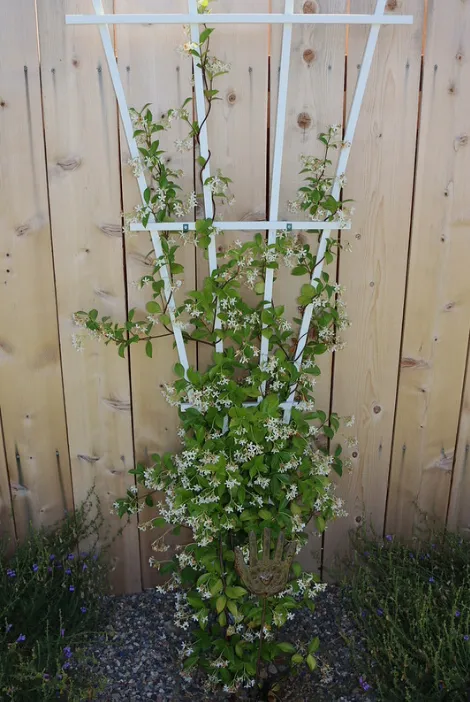
This is probably the most classic look — a fan-shaped trellis mounted flat against a wall or fence. Star jasmine fills it in beautifully because the spreading fan shape naturally encourages the vine to widen as it climbs, creating that lush, full coverage most gardeners are after.
Fan trellises come in wood, metal, and coated wire. Metal and powder-coated versions tend to last longer, especially in humid climates. Wooden ones look gorgeous but need to be treated or sealed if you want them to survive more than a few seasons.
Best for: Covering a single section of wall, framing a window, or creating a focal point behind a garden bench.
2. Wire Grid on a Wall or Fence
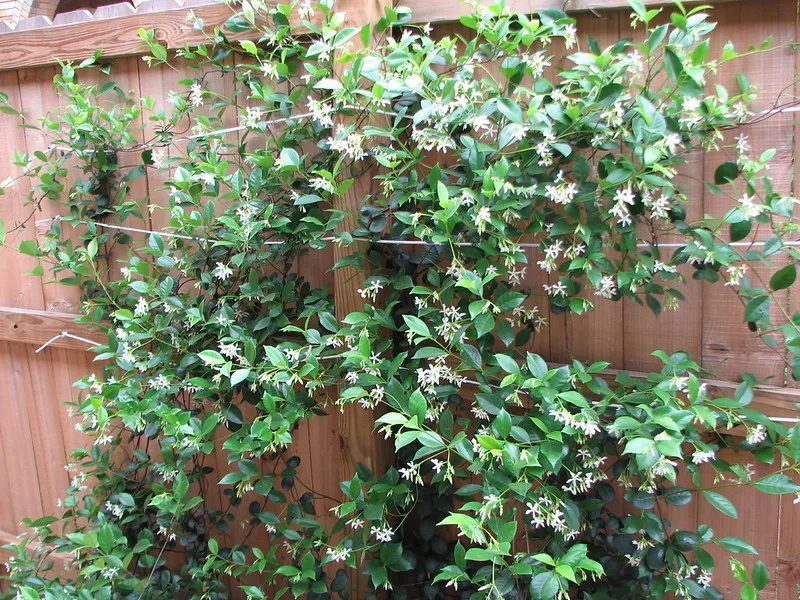
If you want maximum coverage with a clean, modern look, stretched wire grids are hard to beat. You run horizontal wires between vine eyes (small wall anchors) at regular intervals — every 30–45 cm works well — and let the jasmine weave itself through.
This approach is especially popular on rendered walls, brick walls, and timber fences because it keeps the structure almost invisible once the plant fills in. You essentially end up with a wall of green and flower and nobody can tell there’s wire holding it all up.
One thing to plan for: leave a gap of at least 5–8 cm between the wall surface and your wires. That air gap prevents moisture buildup, which can cause rot on wooden fences and staining on painted walls.
Best for: Long fence runs, courtyard walls, rendered or brick surfaces where you want a living wall effect.
3. Freestanding Lattice or Trellis Panel
Not everyone wants to mount something to a wall. Freestanding trellis panels are great for creating privacy screens in the middle of a garden, dividing sections of a yard, or adding a vertical element to a patio without any drilling.
These panels need to be anchored well, though. Star jasmine gets heavy once it matures and fills in — a flimsy panel will topple in a strong wind. Look for panels with ground stakes, or mount them between solid posts set in concrete or weighted bases.
Best for: Privacy screens, garden dividers, patio or courtyard backdrops.
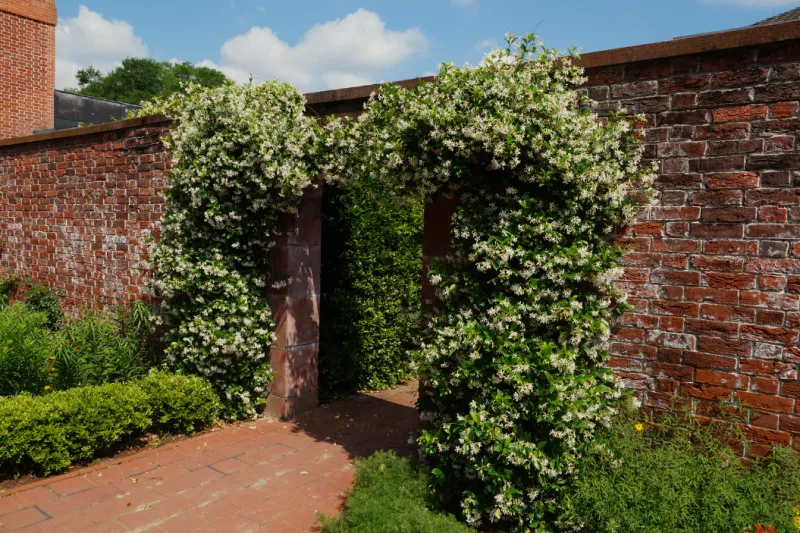
4. Arch or Pergola
This is where star jasmine gets truly show-stopping. Train it over an arch leading into a garden section, and by its second or third year, you’ll have a flowering tunnel that smells incredible in spring. Over a pergola, it creates a shaded, fragrant ceiling that makes sitting outside feel like pure luxury.
The key with arches and pergolas is patience. Star jasmine is not a fast grower in its first year — it puts energy into roots before it puts energy into stems. But once it hits its stride (usually year two onward), it grows confidently. Tie the main stems to the structure loosely with soft garden ties as they extend, and let the side shoots fill in naturally.
Best for: Garden entrances, pathway arches, pergola roofing, outdoor dining areas.
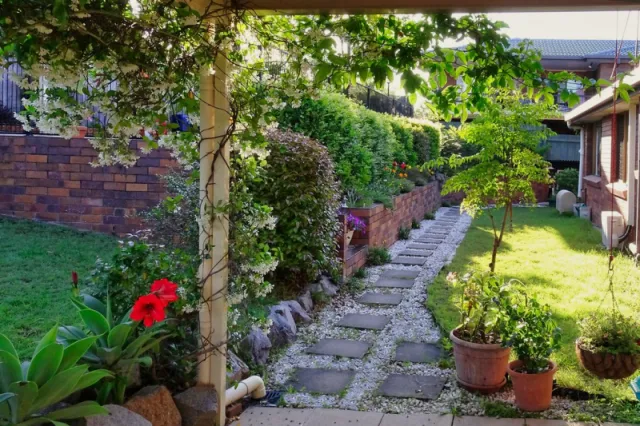
5. Obelisk or Pillar Trellis
Want to add a vertical element to a garden bed or large container? An obelisk trellis gives star jasmine something to spiral around and creates a striking columnar shape — especially useful in formal gardens or on either side of a doorway.
In warmer climates (USDA zones 8 and above), star jasmine can be grown in a large pot with an obelisk and kept on a sunny patio year-round. In cooler areas, you can move it indoors during frost.
Best for: Garden beds, containers, formal or symmetrical garden designs, flanking entryways.
Trellis Material Comparison: Which One Lasts?
The material your trellis is made from matters more than most people realize — not just aesthetically, but in terms of longevity and maintenance. Here’s a quick comparison.
| Material | Lifespan | Maintenance | Best For | Watch Out For |
|---|---|---|---|---|
| Untreated wood | 3–5 years | High (seal annually) | Cottage garden aesthetic | Rot, especially behind dense growth |
| Treated / cedar wood | 10–15 years | Low–medium | Natural look, most styles | Still needs occasional treatment |
| Powder-coated steel | 15–25 years | Very low | Modern or formal gardens | Can rust if coating chips |
| Galvanised wire | 20+ years | Minimal | Wall-mounted systems | Can be fiddly to install neatly |
| Aluminium | 20+ years | None | Lightweight freestanding panels | Less rigid than steel |
| Bamboo | 2–4 years | Medium | Casual, temporary structures | Degrades faster outdoors |
For most permanent plantings, I’d steer toward powder-coated steel or galvanised wire. They outlast the plant through multiple growing cycles without you needing to think about them. If aesthetics matter more and you like a natural look, treated timber or cedar is worth the extra maintenance.
How to Train Star Jasmine onto a Trellis (Step by Step)
Training is one of those things that sounds complicated but is really just about being intentional early on. Here’s what to do.
Step 1: Plant Close to the Base of Your Trellis
Plant your star jasmine at the base of the trellis, about 20–30 cm away from the wall or structure. Too close and the roots dry out in the “rain shadow” of the wall; too far and you’re guiding long stems across bare ground before they reach anything to climb.
If you’re planting against a wall, angle the rootball slightly toward the trellis so the plant naturally leans into the structure from the start.
Step 2: Attach the First Main Stems Loosely
In the first few months, star jasmine’s stems won’t wrap on their own — they need a nudge. Use soft garden ties (not wire, which cuts into stems) to guide the main shoots onto the trellis. Tie loosely in a figure-of-eight knot with the loop around the stem, not tight. You want support, not a tourniquet.
Aim to spread the main stems outward across the trellis rather than letting them all go straight up. A horizontal stem produces more lateral shoots — and those side shoots are what fill in and create that full, lush look everyone wants.
Step 3: Let the Side Shoots Twine Freely
Once the main framework is established and tied in, the side shoots will start finding their own way through the trellis openings. This is where star jasmine’s twining nature kicks in — those young shoots will weave themselves through gaps and wrap around anything narrow enough to grip.
You can help by gently threading stray shoots through gaps rather than letting them flop outward. It takes a minute or two every couple of weeks during the growing season, and the result is a much tidier, denser coverage.
Step 4: Prune After Flowering to Keep It in Bounds
Star jasmine flowers on the previous year’s growth, so you don’t want to prune in spring before flowering or you’ll lose the blooms. The best time to prune is right after flowering ends — usually early to midsummer depending on your climate.
Cut back any shoots that have gone beyond your trellis, trim any long tendrils that are flopping loose, and thin out congested areas to improve airflow. This post-flowering prune keeps the plant neat, encourages fresh growth for next year’s flowers, and stops it from smothering everything nearby.
How Big Will It Get? Knowing Your Space
Star jasmine can spread anywhere from 3 to 9 metres (10 to 30 feet) in ideal conditions — so yes, it can absolutely get away from you if you’re not pruning. The good news is it responds very well to cutting back and doesn’t sulk about it.
For a typical garden trellis panel (say 1.8 m tall by 1.2 m wide), one plant is plenty. For a long fence run or a large pergola, space plants about 1.5–2 metres apart and they’ll join up within two or three seasons.
In terms of height, it’ll climb as high as whatever you give it to climb on. If your trellis is 2 metres tall, the jasmine will fill it to 2 metres and then start cascading back down (which actually looks lovely). If you want it to stop at a certain height, summer pruning is how you enforce that boundary.
Trellis Ideas by Garden Style
Star jasmine is one of those versatile plants that looks at home in almost any garden style. Here are some pairings that work especially well.
Cottage Garden
A wooden fan trellis in a warm corner, with star jasmine climbing up alongside a climbing rose or wisteria. The white flowers of the jasmine make a lovely foil against pinks and purples. Let it get a little wild and romantic — prune just enough to keep it from engulfing everything else.
Modern or Minimalist Garden
Dark powder-coated steel wire grids on rendered white or grey walls, with star jasmine trained flat in a clean, espalier-style shape. The glossy dark green leaves against a pale wall is genuinely striking — and the fragrance in spring makes up for any minimalism that might otherwise feel a bit cold.
Mediterranean or Courtyard Garden
An archway covered in star jasmine between two terracotta-coloured walls. Pair with lemon trees in pots, lavender in gravel, and the whole effect is transportingly Italian. The evening fragrance of the jasmine is especially beautiful in an enclosed courtyard where scent hangs in the air.
Japanese-Inspired Garden
Star jasmine is actually native to East Asia, so there’s something fitting about using it in a Japanese garden context. A simple timber pergola frame with jasmine covering one section, kept clipped and deliberate in shape. The white five-petalled flowers have a delicate look that fits the aesthetic perfectly.
Privacy Screening
If you’re more concerned about function than aesthetics, star jasmine on a freestanding trellis panel makes a superb privacy screen. By year three, the coverage is thick enough to block most sightlines, and you’ve got something that smells wonderful and looks beautiful into the bargain — which is more than you can say for most fences.
Common Problems (and How to Avoid Them)
The Jasmine Isn’t Climbing
Remember — star jasmine doesn’t self-cling. If it’s not climbing, it’s because it has nothing to grip. Make sure your trellis openings or wire spacing is narrow enough for stems to wrap around (under 3 cm in diameter is ideal) and use garden ties to guide it in the right direction until it gets going.
Yellow Leaves
A few yellow leaves here and there are normal, especially in autumn or if the plant is still establishing. But widespread yellowing often points to waterlogged roots, alkaline soil, or iron deficiency. Star jasmine likes well-drained, slightly acidic to neutral soil. If your soil is alkaline, a dose of chelated iron or an ericaceous feed can help.
Not Flowering
Two common culprits: pruning at the wrong time (before flowering, which removes the flower buds) or too much shade. Star jasmine flowers most freely in full sun or light partial shade. In deep shade, it’ll grow but bloom sparsely. If your trellis is in a shaded spot, manage expectations — you’ll get greenery but fewer flowers.
Getting Too Big Too Fast
This tends to happen in warmer climates where star jasmine grows nearly year-round. The solution is simply consistent summer pruning. Don’t be afraid to cut it back hard — it won’t kill it, and it’ll return with fresh growth that flowers better the following season.
Stems Pulling the Trellis Off the Wall
A mature star jasmine is heavier than it looks. If your trellis isn’t secured properly, a full plant can pull fixings right out of the wall. Use wall plugs and screws rated for outdoor use, and if you’re in a windy spot, put in extra fixings rather than fewer. It’s much easier to put them in at installation than to deal with a collapsed trellis mid-season.
Growing Star Jasmine in a Pot on a Trellis
Yes, this works — and it’s a great option if you’re gardening on a balcony, rented property, or just want a moveable fragrant feature. A few things to know:
Use a large pot — at least 40–50 cm in diameter. Star jasmine has a reasonably vigorous root system and will stunt in something too small. A terracotta pot looks beautiful and provides good weight stability, but plastic or fibreglass is fine if you need something lighter.
Plant in a good quality potting mix with added grit or perlite for drainage. Star jasmine hates sitting in wet compost — root rot is one of the few things that genuinely kills it.
Stick a small obelisk trellis (60–100 cm tall) into the pot, or position the pot directly against a wall trellis and tie the stems in. Feed every two weeks during the growing season with a balanced liquid fertiliser, switching to a high-potassium feed (like tomato food) as flower buds form.
Water more frequently than you would in the ground — pots dry out fast, especially in summer. But always let the top few centimetres dry out between waterings rather than keeping the compost constantly wet.
Quick-Reference: Star Jasmine Trellis Setup Checklist
| Task | When | Notes |
|---|---|---|
| Install trellis before planting | Before planting day | Easier to fix properly when soil is undisturbed |
| Plant 20–30 cm from wall | Planting day | Avoids rain shadow; angled toward trellis |
| Attach main stems to trellis | First few weeks | Soft ties in figure-of-eight; spread stems horizontally |
| Thread side shoots through trellis | Spring–summer, ongoing | Every week or two; takes a few minutes |
| Water regularly while establishing | First season | Especially important in hot, dry spells |
| Fertilise during growing season | Spring–early summer | Balanced feed; high-potassium as buds form |
| Prune after flowering | Early–midsummer | Cut back to trellis boundary; thin congested areas |
| Check trellis fixings | Late winter / early spring | Before the weight of the new season’s growth |
Final Thoughts
Star jasmine on a trellis is genuinely one of the most rewarding combinations in gardening. It’s not fussy, it’s not temperamental, and once it’s established, it gives you back far more than you put in — a wall of fragrant white flowers every spring, glossy green leaves through most of the year, and a structure that looks like it belongs in a garden magazine.
The key is to set it up properly from the start: a trellis it can actually wrap around, stems guided and tied in when they’re young and flexible, and a summer prune each year to keep it in check. Do those three things and star jasmine will reward you for years — probably decades.
If you’re still deciding between trellis styles, my honest suggestion is to go for the one that suits your wall or fence structure first, your aesthetics second. The right support for the space will always look better in the long run than the prettiest trellis crammed into the wrong spot. And once the jasmine covers it? You’ll barely see the trellis anyway.
Happy growing.