I grew my first raised-bed corn patch in a 4×8 timber frame and made every mistake you can imagine — nitrogen crash mid-season, aphids coating every stalk, bare soil baking between the rows. It wasn’t until I started experimenting with companions that the whole bed came alive. These days, I barely pull a weed, the ears are fatter, and the soil is dark and crumbly by harvest time.
This guide walks you through the best companion plants for corn in a raised bed: why they work, how to space them, and which combinations to avoid. Whether you’re growing sweet corn, popcorn, or flour corn, the principles are the same.
Start with the Three Sisters — the original companion trio
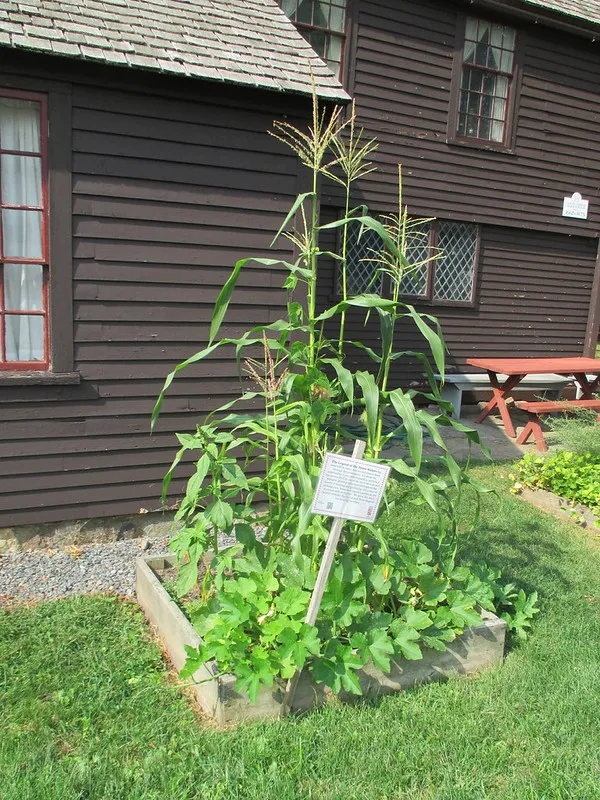
Long before raised beds became a garden trend, Indigenous farmers across the Americas perfected a three-plant system that feeds itself, suppresses weeds, and keeps the soil intact across generations. It’s called the Three Sisters, and it works just as brilliantly in a modern raised bed as it did in an ancient field.
🌽 Corn — The First Sister
Provides the vertical structure — a natural trellis for beans to climb. Always plant in a block, never a single row.
🫘 Beans — The Second Sister
Fixes atmospheric nitrogen directly into the soil, feeding corn’s voracious appetite all season long without added fertiliser.
🎃 Squash — The Third Sister
Sprawls across the soil surface, shading out weeds and locking in moisture so the whole bed stays cool and productive.
In a raised bed, the Three Sisters need a little adaptation. Plant corn first in a tight block — at least 3×3 — so wind pollination works properly. Wait until stalks are 30 cm tall, then sow pole beans at the base of each stalk. Add compact squash (mini pumpkins, acorn squash, or bush zucchini) in the corners. Full-sized pumpkin vines will escape the bed; keep to compact varieties.
Don’t plant all three at once. Get your corn in the ground first and wait until the stalks are knee-high before adding beans and squash — this prevents beans from outcompeting young corn seedlings.

Beyond the Three Sisters: more great companion plants
The Three Sisters are a classic starting point, but there’s a whole garden’s worth of plants that can partner with corn in a raised bed. Here are the best, grouped by the role they play.
Nitrogen fixers
Pole beans and bush beans are the backbone of any Three Sisters bed. They host Rhizobium bacteria in nodules on their roots, pulling nitrogen from the air and making it available directly to corn. Plant pole beans at the base of each stalk once corn is 30 cm tall.
Cowpeas (black-eyed peas) are a heat-tolerant, drought-resistant alternative to common beans — particularly good in warm climates. They fix nitrogen just as effectively, tolerate dry spells better, and double as a food crop.
Crimson clover is an excellent low-growing groundcover to tuck between corn rows. It fixes nitrogen continuously and can be cut and left as a green mulch mid-season, releasing nutrients right where the roots need them.
Pest deterrents
Marigolds are the garden workhorse. French marigolds (Tagetes patula) repel aphids, whiteflies, and deter soil nematodes. Plant them along the border of the raised bed for a protective ring around your corn.
Dill attracts predatory wasps and lacewings that feed on aphids and caterpillars attacking your corn. Let it flower for maximum effect — it will self-seed and return each year with very little effort.
Borage repels tomato hornworm (which also visits corn) and draws bees furiously when it flowers in late summer. Its star-shaped blue blossoms are edible too — a bonus for the kitchen.
Nasturtiums pull double duty: they attract pollinators and act as a trap crop for aphids, luring them away from your corn. Let them trail over the edges of the bed where they won’t compete for root space.
Chives and garlic planted at the bed’s border confuse and repel aphids and soft-bodied insects with their strong scent. Both are perennial — plant once and benefit for years.
Ground covers
Squash and zucchini (compact varieties) are the original Three Sisters ground layer. Their large leaves shade the soil, lock in moisture, and keep weed germination low throughout the season.
Cucumber is a solid alternative if you’re short on space for squash. Cucumbers love the afternoon shade that corn provides, and they keep the soil surface cool and covered without sprawling as aggressively as pumpkins.
Pollinator magnets
Sunflowers planted at the sunny end of the bed draw pollinators and beneficial insects into the garden ecosystem. Their deep taproots also help break up compacted subsoil beneath the bed. Choose dwarf or semi-dwarf varieties so they don’t shade out your corn block.
Spacing guide for a raised bed
Space is the biggest constraint when growing corn in a raised bed. Always plant corn in a block of at least 3×3 — in a standard 4×4 bed, that’s nine plants in a grid, not a line. Wind pollination requires mass; a single row produces poorly filled ears no matter how long it is.
| Companion Plant | Position in Bed | Spacing from Corn | Notes |
|---|---|---|---|
| Pole beans | Base of each stalk | 5–8 cm away | Plant after corn is 30 cm tall |
| Bush squash / zucchini | Bed corners | 45–60 cm from centre | Use compact varieties only |
| Marigolds | Bed perimeter | Along the border | French marigold preferred |
| Sunflowers | Sunniest end of bed | 50–60 cm from corn block | Dwarf varieties work best |
| Dill | Corners or edges | 25–30 cm from corn | Allow to flower for best effect |
| Nasturtiums | Bed perimeter | Along the border/edges | Let them trail over the side |
| Chives / garlic | Permanent border planting | Edge of bed | Perennial — plant once |
| Crimson clover | Between corn rows | In gaps between plants | Mow or cut mid-season |
Read More: Companion Planting with Lemongrass: Best Plants to Grow Together
Plants to avoid growing near corn
Companion planting isn’t just about good relationships — it’s also about knowing which plants compete, inhibit, or share pests with corn. Keep these away from your corn bed.
- Tomatoes — Share the same major pest (corn earworm / tomato fruitworm) and compete heavily for nutrients. Keeping them apart reduces pest pressure on both crops.
- Fennel — Allelopathic. Releases root compounds that inhibit germination and growth in most vegetables, including corn. Keep fennel in a container or at the far end of the garden.
- Brassicas (cabbage, broccoli, kale) — Heavy feeders that compete directly with corn for nitrogen and space. They belong in a separate bed entirely.
- Celery — Believed to have an inhibitory effect on corn growth. Keep them in separate beds to be safe.
- Large vine squash — Full-sized pumpkins or butternut squash will overwhelm the bed, shade out companions, and climb the corn stalks. Stick to compact or bush-type varieties.
What companion plants actually do for your corn
Understanding the specific mechanisms makes you a much more intentional gardener. Here’s what’s actually happening when you choose the right neighbours for your corn.
Nitrogen replenishment
Corn is one of the most nitrogen-hungry crops you can grow. Legumes — beans, cowpeas, clover — host Rhizobium bacteria in nodules on their roots. These bacteria pull nitrogen from the air and convert it into a plant-available form that corn roots absorb directly. In practice, this means you can significantly reduce added fertiliser mid-season when beans are planted alongside corn.
Weed suppression
Bare soil in a raised bed is an open invitation for weeds. Low-growing companions like squash, nasturtiums, and clover form a living mulch that shades the soil surface, keeping weed seeds in the dark where they can’t germinate. Less weeding, better moisture retention, cooler root zones — it’s a win on every front.
Pest disruption
Monocultures are a pest’s best dream: unlimited food, no obstacles, no predators. When you break up a corn block with different plant shapes, scents, and textures, pests have a harder time navigating and spreading. Meanwhile, flowering companions like dill and borage attract parasitic wasps that actively hunt and parasitise caterpillars and aphids targeting your corn.
Soil health
Deep-rooted companions like sunflowers help break up compacted subsoil beneath the bed. Clover and other legumes improve the soil microbiome, increasing the diversity of beneficial bacteria and fungi. Over multiple seasons, a well-companioned bed improves noticeably — darker soil, better drainage, fewer disease problems.
Practical tips for raised-bed corn companions
Water everything evenly
Mixed plantings have different water needs. Rather than overhead watering (which promotes fungal disease on corn leaves), set up a simple drip irrigation system or soaker hose. It delivers water to the root zone, keeps foliage dry, and lets all companions thrive without hand-watering each individually.
Feed the bed before planting
Before planting, enrich your raised bed with a generous 5–8 cm layer of compost worked into the top 15 cm. Once corn is knee-high, side-dress with compost or a balanced organic fertiliser. Your bean companions will top up nitrogen continuously, but corn benefits from that early boost to establish a strong root system.
Think in layers, not just rows
A raised bed is three-dimensional. Corn is the canopy, beans and cucumbers are the mid-level climbers, and squash, nasturtiums, and clover form the ground layer. This vertical layering means you extract significantly more produce and ecological function from the same square footage — exactly what raised beds are designed for.
Rotate companions with the corn
Corn will deplete your bed if grown in the same spot year after year. The following season, plant a nitrogen-fixing cover crop (clover, broad beans, or cowpeas) in the same bed before transitioning to a different crop family. This rotation keeps the soil balanced and prevents build-up of corn-specific pests.
Watch for airflow problems if corn is planted too densely. Stick to 30 cm spacing between stalks, and remove the lowest yellowing leaves once the plant is tasselling to improve circulation and prevent grey mould.
A bed full of allies, not just corn
The best raised-bed corn patch isn’t a monoculture of tall stalks — it’s a layered, living community where every plant earns its place. Start with the Three Sisters if you’re new to companion planting, add marigolds and dill for pest control, and watch your bed transform into something genuinely self-sustaining.
Once you see how much less work a well-companioned bed requires — fewer pests, less fertiliser, less weeding — you’ll never go back to growing corn alone.
Good gardens are built on good relationships. 🌽
Read More: 7 Best Companion Plants for Collard Greens: A Guide to Companion Plants